
1. Introduction
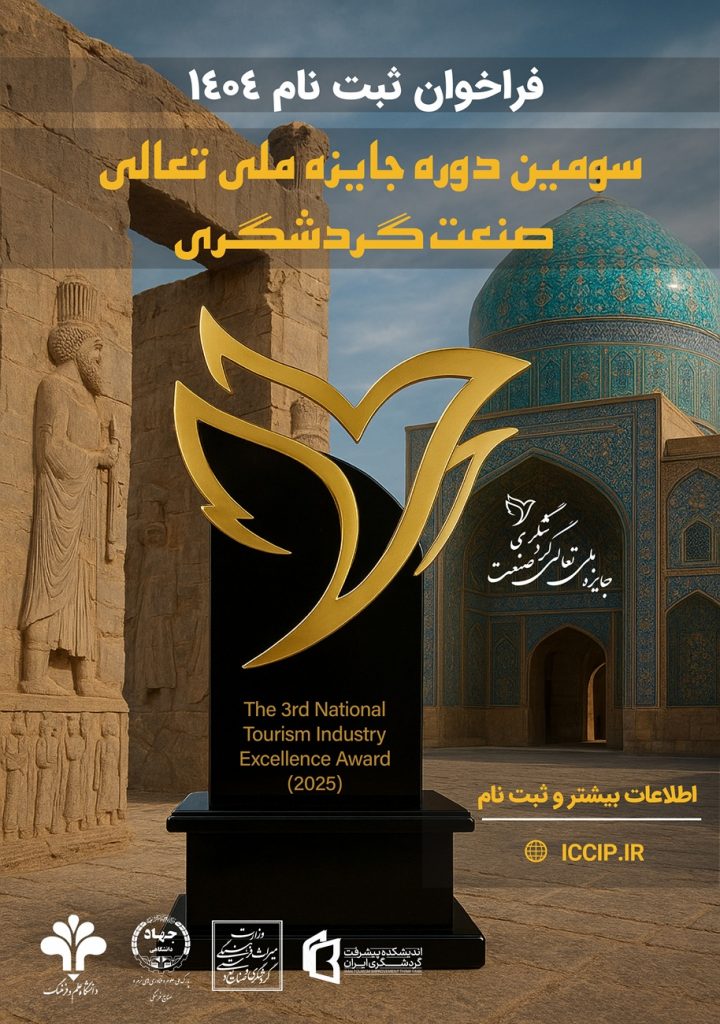
The National Tourism Industry Excellence Award is the country’s first specialized award in the field of organizational excellence management with a focus on tourism. This award has been designed based on international models, particularly (EFQM), and localized according to Iran’s conditions. Its main goal is to improve the quality of management, innovation, and competitiveness of tourism organizations.
This guideline has been prepared to assist applicant organizations so that, by becoming familiar with the model, processes, and requirements, they can have an effective participation.
2. Tourism Excellence Model and Organizational Application
The Tourism Excellence Model is the backbone and the main basis of evaluation in the National Tourism Industry Excellence Award. All evaluations, scoring, and decisions regarding award levels are carried out based on this model. Therefore, applicant organizations must compile and present their capabilities, achievements, and results based on the criteria of this model.
The evaluation model includes 8 main criteria:
A) Enablers
Leadership and Governance
Strategy and Planning
Human Capital
Partnerships and Resources
Processes, Products, and Services
B) Results
Customer and Tourist Results
Employee Results
Key Performance Results (Financial, Market, and Sustainability)
This model is evaluated based on the RADAR logic (Results, Approaches, Deployment, Assessment, and Refinement).
The Role of the Model in the Evaluation Process
Application: Organizations are required to prepare their excellence application based on the criteria and sub-criteria of the model and submit it to the secretariat. This application serves as the organization’s “roadmap” for introducing its management system, approaches, results, and achievements.
Evaluator Visits: After the initial review of the application, evaluation teams examine the accuracy and sufficiency of the evidence provided in the application during field visits. Therefore, the application and the available evidence at the organization’s premises must be fully aligned with the Tourism Excellence Model.
How to Prepare the Application
To prepare the application, organizations must:
Provide key organizational information at the beginning of the application (introduction, mission, structure, stakeholders, and competitive environment).
Describe enablers: Explain what approaches have been adopted, how these approaches have been deployed throughout the organization, and through what mechanisms they have been monitored and improved.
Present results: The organization’s quantitative and qualitative achievements in the areas of finance, customers, employees, sustainability, and innovation must be presented through data, tables, charts, and trend analysis.
Follow the RADAR logic: Simply presenting activities is not sufficient; the complete cycle from designing approaches to evaluating results and continuous improvement must be demonstrated.
Follow the volume and format requirements of the application according to the award level.
The application must be prepared in a documented, transparent, and evidence-based manner so that evaluators can clearly identify the organization’s strengths and areas for improvement.
3. Award Levels
To create motivation and enable different organizations to participate, the award is defined at several levels:
Commitment to Excellence Certificate (for newcomers)
Tourism Excellence Recognition Certificate
National Tourism Excellence Trophy (at three levels: Bronze, Silver, and Gold)
Scoring Threshold (out of 1000 points):
Commitment Certificate: Minimum 150 points
Recognition Certificate: 250 to 500 points
Bronze Trophy: 500 to 600 points
Silver Trophy: 600 to 700 points
Gold Trophy: More than 700 points
Important Note Regarding Award Level Selection
Registration at the requested level (Commitment Certificate, Recognition Certificate, or Trophy) does not mean guaranteed receipt of that level. It only indicates the level at which the organization intends to enter the award process.
Registration Fee
Organizations with up to 50 employees: 200 million IRR
Organizations with 51 to 200 employees: 300 million IRR
Organizations with more than 200 employees: 400 million IRR
The award secretariat plans the evaluation process according to your selected level:
The higher the requested level, the greater the need for more evaluators, the presence of more experienced senior evaluators, more days required for review and visits, and more support facilities.
Therefore, registration fees at higher levels are naturally higher because the implementation and evaluation costs for the secretariat increase.
It is recommended that before selecting a level, you consult with the award secretariat to choose a level that:
Matches the level of readiness and maturity of your organization,
Does not create unnecessary additional costs for the organization,
Provides the best opportunity to receive valuable and realistic feedback from the evaluation process.
A smart selection of the participation level benefits both your organization and contributes to a fairer and more accurate implementation of the award process.
4. Participation Process
Main Steps (October 2025 to March 2026):
Announcement and initial registration (October)
Final registration and submission of applications (until December)
Training and organization of evaluators (Autumn)
Individual and team evaluation of applications (January and February)
Field visits to selected organizations (February)
Consolidation of evaluations and feedback reports (February)
Final review by the judging committee and determination of award levels (February)
Holding the national conference and introducing winners (to be announced later)
5. Requirements for Preparing the Application
Based on national organizational excellence rules:
Application Structure:
Key organizational information
Enablers (according to the Tourism Excellence Model)
Results (along with data and charts)
Allowed Volume:
Commitment Certificate: Maximum 15 pages
Recognition Certificate: Maximum 50 pages
Trophy: Maximum 75 pages
Writing Format:
Word software, final submission in PDF format
Font: B Nazanin
Main titles: Size 14, subheadings: Size 13, text: Size 12
Restrictions:
Use of links, QR codes, or external references outside the text
Providing documents beyond the permitted page limit
6. Training and Empowerment Program
Training applicant organizations for preparing applications (workshops, webinars, and specialized consulting)
7. Benefits and Achievements of Participation
Receiving a comprehensive feedback report including strengths and improvement opportunities
Comparing the organization’s position with competitors at the national level
Introducing and branding leading organizations through the award’s media coverage
Possibility of benchmarking and experience exchange with other leading organizations
8. Key Recommendations for Applicants
Form an internal excellence team (including representatives from management, human resources, marketing, and operations).
View the application as an organizational improvement roadmap, not merely as a means to receive an award.
Provide real documentation and reliable data.
Benefit from the secretariat’s consulting services and training workshops.
For success, embed the excellence approach into the organization’s culture and strategy.


No comment