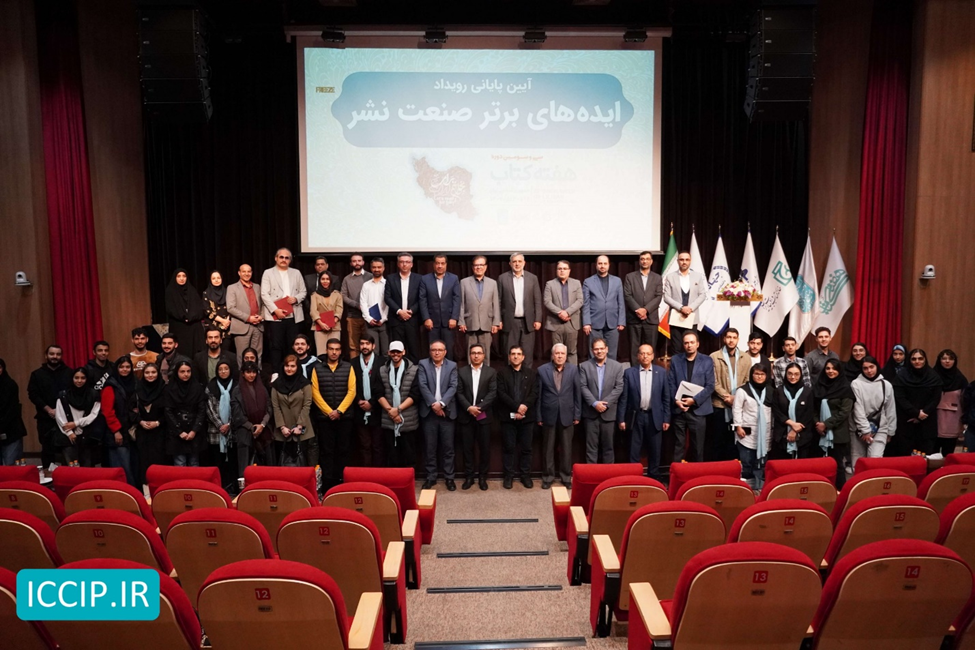
The closing ceremony of the “Top Ideas in Publishing Industry” event was held at the University of Science and Culture with the presence of Dr. Mohsen Javadi, Cultural Deputy of the Ministry of Culture and Islamic Guidance, Dr. Mohammad Hossein Imani Khoshkhoo, Head of The Soft Technology and Cultural Industries Park and President of the University of Science and Culture, Dr. Ebrahim Heidari, CEO of Iran’s Book and Literature House, Dr. Mahmoud Aligoo, Cultural Deputy of Academic Center for Education, Culture and Research (ACECR), a group of deputies, university and park managers, and activists of the publishing industry.
Emphasis on the Status of Books and Expansion of Technological Collaborations
At the beginning of the ceremony, Dr. Mohammad Hossein Imani Khoshkhoo, in his speech, referred to the importance of Book Week and said: Dedicating a week to books indicates the special attention of the Islamic Republic of Iran to the issue of books and reading, and every year effective programs are implemented in this field.
The Head of The Soft Technology and Cultural Industries Park, referring to the collaborations of this park with Iran’s Book and Literature House, added: Over the past year, good interactions have begun in the field of developing publishing technologies. The starting point of this collaboration was at this year’s International Book Fair, and now we are witnessing its expansion. We hope this connection continues consistently.
He also referred to the park’s activities in other areas of cultural industries and said: In the field of cinema, an important project has also begun in connecting cinema and artificial intelligence, and next week a memorandum of understanding will be signed in this regard. Also, in the field of music, programs are underway. Publishing is also the third area that we have entered with the cooperation of the Ministry of Culture and Islamic Guidance, and we hope that these actions will be integrated and structured at the macro-management level of the two organizations, ACECR and the Ministry of Guidance.
The President of the University of Science and Culture further stated: A large part of the executive affairs and even participation in planning and policymaking is the responsibility of the country’s elite and academic sector; establishing a connection between the university and industries and the publishing industry, as well as creating the necessary infrastructure for the future development of the publishing industry, is necessary and essential. Therefore, we must move in a direction that has surrounded the world, because the role that technologies play today in the development of the country and culture is undeniable.
The Necessity of Utilizing New Technologies in the Publishing Industry
Further in the ceremony, Dr. Ebrahim Heidari, emphasizing the importance of technology in the future of the publishing industry, said: Technology development is one of the most important concerns of cultural industries and Iran’s Book and Literature House. One of the four major programs of Dr. Salehi, the Minister of Culture and Islamic Guidance, since the beginning of his management period, has been a serious entry into new technologies, especially in the field of publishing, and our actions are also moving in this direction.
The CEO of Iran’s Book and Literature House, referring to the changing tastes of the young generation and the necessity for the publishing industry to move towards new technologies, added: Printed books still hold their place, but the way the new generation receives information is different, and we must move towards technology more quickly.
He explained about holding the “Top Ideas in Publishing Industry” event: This event began with the cooperation of The Soft Technology and Cultural Industries Park at the International Book Fair, and after the call for proposals, valuable ideas were sent to the secretariat by activists and elites. We hope that by utilizing these ideas and the capacities of universities and the private sector, an effective communication link will be created between the university and the publishing industry.
He emphasized: A significant part of program implementation and even playing a role in future policymaking rests on the shoulders of elites and academics. Establishing a connection between the university and the publishing industry and providing the necessary infrastructure for the future development of this industry is an undeniable necessity; because technology today plays a decisive role in the cultural development of the country.
Decreased Demand for Books is a Serious Challenge for the Publishing Industry
Dr. Mohsen Javadi stated that in past decades, technology only transformed the material aspects of human life, and said: Today, technologies such as artificial intelligence affect the human mind, emotions, and way of thinking, and play a multifaceted assistant role for humans.
The Cultural Deputy of the Ministry of Culture and Islamic Guidance, referring to the significant decline in demand for non-textbook books in recent years, added: The decrease in demand for books is a serious challenge for the publishing industry; but technologies and innovations can revolutionize this path. Just as Iran shone in the past with its scientific and literary greats, today, by utilizing new technologies, it can once again be prominent on the global stage.Improving the level of reading by designing a model
Dr. Mahmoud Aligoo also noted at the closing ceremony of this event: Reading varies among the general public. In the “Top Ideas in the Publishing Industry” event, I concluded that the personalization of reading books should happen. We should design this model based on existing platforms for people’s reading.
The cultural deputy of Jihad Daneshgahi added: In the past, we produced 50 to 100 Persian books annually; but now thousands of books are printed and published, and it is unclear whether they are useful for readers or not. According to this model, books, whether liked or disliked, can bring about a great transformation in the publishing and book industry. The cultural deputy of Jihad Daneshgahi supports such top ideas for their commercialization.
The path of publishing goes through technology
The secretary of the Digital Publishers Association and one of the judges of the “Top Ideas in Publishing” festival said at this event: When electronic publishing and publishing technologies officially started their activities at the book fair for the first time, it showed that Iran has a special place in this field, not only among neighboring countries but also in the world.
Dr. Ali Mohammadpour added: Fortunately, Iran has made significant progress in this field. Currently, our electronic publishing has more than 10 million audiences, and audiences are familiar with applications such as Fidibo, Taghche, and so on. So far, 150,000 digital books have been published in the publishing sector, which are accessible to enthusiasts.
He added: We believe that publishing goes through technology, and technology leads to the growth of the publishing industry. The “Top Ideas in the Publishing Industry” event has also passed through technology. From the beginning of the call for submissions, 157 works were sent to the secretariat of this event. 30 were initially judged and evaluated. Finally, today 8 works are selected as winners. Creativity and innovation were among our criteria for judging so that these ideas could meet the needs of the country’s publishing industry.
He stated: A large part of the submitted works was related to artificial intelligence. This shows how up-to-date our academic and technological layers are, and the Ministry of Culture and Islamic Guidance, which has a technological approach, should fully enter the field of artificial intelligence.
At the end, 8 top ideas of this event were honored.
The names of the winners are as follows:
1-Arezoo Ramezani, idea of the National Digital Book Lending Platform of Iran
2-Mohammad Mahdi Mohammadi Ardehali, idea of Ketabiz
3-Elham Naderi Farid, Cookie – Smart Animation Content Production Platform from Books
4-Mohammad Javad Pardakhteh “Ketab-e Zendeh” (Living Book), an interactive, personalized, and AR/AI-based publishing platform for the Persian-speaking market
5-Marzieh Kadkhodaei, idea of interactive digital children’s books
6-Ahmad Attarzadeh Niasari, “Smart Publishing Iran” platform; an artificial intelligence ecosystem for transforming the book value chain
7-Jafar Sadeghi Younesi, Ketabino platform; digital publishing + print on demand
8-Seyed Ali Mostajab al-Da’avat, idea of Haptic-Augmented Books with haptic technology
Also, on the sidelines of this event, on the occasion of Book and Reading Week and with the aim of promoting reading culture among students, the “Let’s Read for Iran” campaign was held by the University of Science and Culture, in which 50 out of 230 participants were selected and received a 500,000 Toman gift card with the support of the university.

No comment